
Gathered fruits and Prepared Victuals
Most people not living or coming from the North share a belief that the food eaten by the Northerners is bland and austere. This belief melts away very quickly once someone gets a bite of steamed salty seaweed stew with a side of roasted huran root.
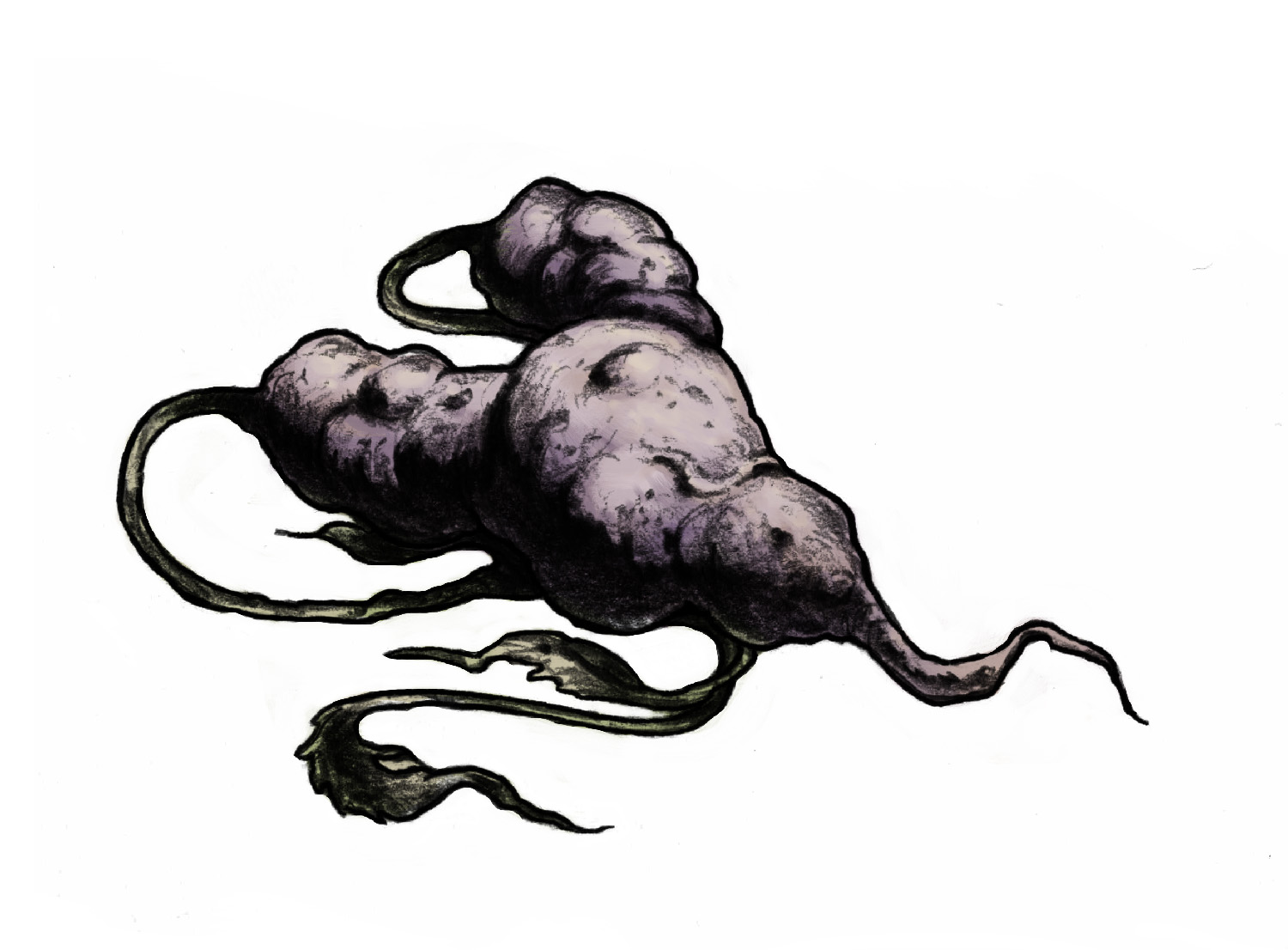
Huran Root
In the North, mountain streams run to strong rivers that feed into the cold sea, and within these estuaries grows a staple of Northern culture. The Huran root, a purple knotted root that often grows in a mangled Y shape, has been cultivated in the north since days were recorded. At the edge of estuaries the Northerners wall small pools with stone and plant the Huran inside, usually in summer. The Huran will grow slowly and bud in the spring, just in time for the Coccurnir fish to lay eggs around the stocks, providing shelter for the eggs and eventually food when they hatch. The adult Coccurnir die off, providing fertile ground for the next year’s planting. The Huran Root is then harvested, two branches of the Y cut and one left to grow anew.
Huran Root is known for its starchy nature and nutty flavour. It’s most often enjoyed fully roasted with seafood, milled into a flour that makes breakfast dumplings, or distilled with flowers for a delightful, despite belly-fire conjuring, alcohol.
Tae-to paste
Northerners are known as hard and hardy people but that does not mean they are without delights. One of which is Tae-to, a devilishly addictive paste made of the boiled leftover innards of crab after being shelled, a sprig of bear primsey, and mushrooms left to ferment for a moon’s cycle. It’s to be enjoyed with huran root, crab, and even on bear meat by some of the more adventurous.
There’s a variation, Sacred Tae-to, replacing the crab with the marrow of a skyfire sloth. This was reserved for the Gods until the fall of the Placid Palace, but now after liberation it’s given commonly as a wedding gift.
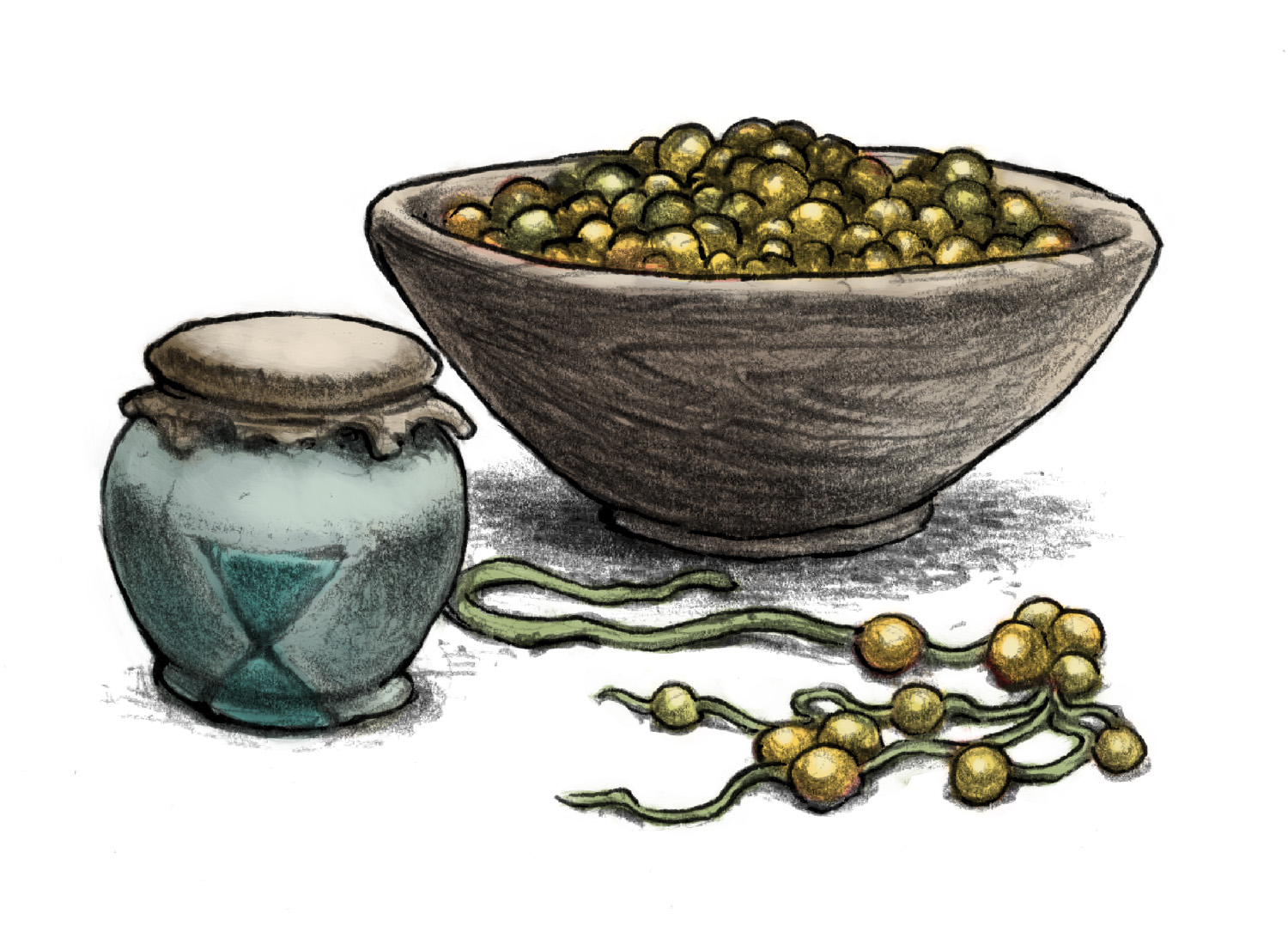
Ruck Poppers
The sea is a cruel place for many waking creatures but it has been known at times to be kind. One such kindness is the Ruck, a type of sea plant found in the north with branching tendrils adorned with fruit akin to a bead. These Ruck Poppers have a bright and sour note with a lingering sweetness. They are enjoyed in bowls after being streamed with flowers of various breeds and tastes to compliment.
The most enjoyed accompanying flower is one from the Thunder Revel plant, however this flower only blooms in a storm and oft a patch already claimed by the skyfire sloth. Some brave or stupid do not let that dissuade them, keeping alive the dead god’s motto of “Death for Decadence”.
Chewing water-weed
A tough dark-brown seaweed that tends to float at the surface of still waters, folks at sea will collect some as they pass through a patch and keep it in a small jar filled with seawater. Chewing on this weed is both a way to alleviate boredom during long passages, and a way to deal with the hunger that afflicts unsuccessful fishers. Experienced sailors will also swear that it gives them an unnatural fortitude and determination, especially if harvested during the first days of Vatur.
Hard fish
The oldest way to preserve fish known to the northerners is drying it on large wooden racks during Kolrom when the climate is driest. The resulting hard fish as it’s called can last for years. The taste and texture are not everyone’s favorites and most people cover it with Tae-to-paste, butter or fresh seaweed depending on the season.
Wild Yellow Garlic
A small and delicate plant that grows only one every 3 years in forested undergrowth. It has a strong taste and is sometimes used to flavor meals but the main reason it is sought after is because it gives the person who consumes it a superior vision in the dark for a wake. The best foraging areas for wild yellow garlic are well-kept secrets even to this day.